Advanced Wound Care Within a Level I Trauma Environment
PalmBeachWoundReconstruction.com is the focused wound referral front door for Plastic Surgery Trauma Associates.
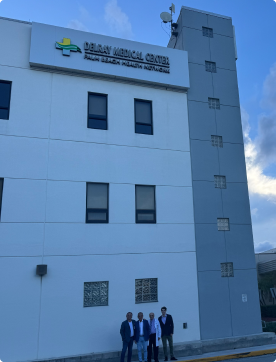
The Delray Advanced Wound Center pathway evaluates wounds ranging from minor injuries that are not healing as expected to the most complicated wound failures in the area.
This is an advanced wound care center housed within a Level I trauma center environment. It is not a small community wound center.
That distinction matters. Complex wounds often require plastic surgical judgment, perfusion-aware assessment, staged reconstruction, hospital access, hardware-preservation strategy, and escalation pathways when routine wound care is not enough.
Published Wound-Reconstruction Doctrine
Techniques developed by our plastic surgeons have been published in peer-reviewed journals, presented at major national and international meetings, and have influenced how colleagues approach difficult wounds beyond our local region.
The program’s wound strategy is built around tissue perfusion, structural stability, early tissue salvage, dead-space control, hardware protection, and durable closure rather than dressing selection alone.
This academic foundation informs the same practical question asked in every wound evaluation:
What is the shortest safe path to durable healing, preserved mobility, and restored function?
Early Presentation Changes the Course of Care
Timing is often the difference between a short wound course and months of avoidable care.
We consistently see wounds that arrive after weeks or months of failed treatment. In many of those cases, earlier reconstructive evaluation could likely have shortened the course of care dramatically.
Early presentation allows assessment of perfusion, tissue viability, hematoma, shear injury, exposed structures, infection risk, and mechanical stress before the wound declares itself through necrosis, breakdown, or prolonged nonhealing.
The earlier the reconstructive problem is identified, the more options remain available.
Complex Wounds Need More Than Dressing Changes
Some wounds fail because the problem is not the dressing.
Complex wounds may involve compromised perfusion, exposed hardware, postoperative breakdown, tissue fragility, infection risk, hematoma, dead space, shear injury, or mechanical instability.
When these factors are present, wound care becomes reconstructive care.
The objective is not simply to cover the wound.
The objective is durable healing under biologic and mechanical stress.
When Wounds Require Escalation
A wound should be evaluated for reconstructive escalation when the clinical problem extends beyond surface healing.
Escalation may be appropriate when there is:
- exposed bone or hardware
- threatened tissue viability
- recurrent breakdown
- infection concern
- postoperative failure
- avulsion-pattern injury
- expanding hematoma
- persistent drainage
- wound progression despite standard care
Early evaluation can reduce prolonged wound courses, repeated dressing changes, avoidable tissue loss, repeat procedures, and loss of mobility in vulnerable patients.
Wounds Commonly Evaluated
- Minor wounds that are not progressing appropriately
- Traumatic wounds
- Geriatric skin tears
- Avulsion injuries
- Postoperative wound breakdown
- Exposed orthopedic hardware
- Nonhealing surgical wounds
- Morel-Lavallee or internal degloving injuries
- Wounds in anticoagulated or medically fragile patients
- Failed prior closure
- Complex wounds requiring staged reconstruction
Aging Skin Wounds Behave Differently
In older patients, minor trauma can create major tissue compromise.
Fragile skin may lose perfusion after shear injury, hematoma formation, anticoagulation-related bleeding, or avulsion. A wound that appears manageable at first may progress to necrosis, prolonged drainage, repeated visits, and healing measured in months rather than weeks.
In aging skin, the objective is not simply closure.
The objective is tissue salvage, durable healing, mobility preservation, and quality of life.
Geriatric Skin Tears and Avulsion Injuries
Geriatric skin tears and avulsion injuries may behave less like normal skin flaps and more like compromised graft-like tissue.
When the blood supply to the lifted tissue is disrupted, the wound may deteriorate even when the skin initially appears viable.
Reconstructive evaluation focuses on perfusion, tissue stability, hematoma control, shear prevention, and structured follow-up.
Early stabilization may help preserve tissue that would otherwise declare itself as nonviable over time.
Hardware Exposure and Postoperative Wound Failure
Exposed orthopedic hardware is a structural wound problem.
Once plates, screws, rods, joint hardware, or fixation devices are exposed or threatened, the endpoint is not simply skin closure. The endpoint is durable coverage that protects the reconstruction, reduces dead space, supports infection-risk management, and preserves function when biologically feasible.
Postoperative wound breakdown should be evaluated in the context of the underlying operation, hardware stability, tissue viability, contamination risk, patient biology, and the mechanical stress placed across the wound.
Hospital-Based Wound Reconstruction
Complex wounds may require hospital-based reconstructive planning.
Management may include:
- perfusion assessment when indicated
- staged debridement
- hematoma evacuation
- tissue stabilization
- local or regional flap reconstruction
- microsurgical reconstruction in selected cases
- infection-risk coordination
- hardware preservation strategy
- negative pressure therapy when appropriate
- structured follow-up through wound healing
Care is coordinated through a reconstructive framework rather than isolated dressing changes.
Reconstructive Strategy
The reconstructive plan is built around tissue physiology, perfusion, contamination burden, structural support, mechanical stress, and the durability requirements of the underlying injury.
The question is not only whether a wound can be closed.
The question is whether it can stay closed under biologic and mechanical stress.
This distinction matters in traumatic wounds, postoperative breakdown, geriatric avulsion injuries, exposed hardware, and wounds that have failed prior closure.
Delray Advanced Wound Center Pathway
For outpatient wound evaluation and longitudinal follow-up, patients may be seen through the Delray Advanced Wound Center pathway.
This pathway supports:
- physician-directed wound evaluation
- wound trajectory monitoring
- early recognition of wounds likely to fail standard care
- escalation when standard care is not enough
- coordination with hospital-based reconstruction when needed
- care for aging-skin injuries and complex postoperative wounds
When to Call
Call for evaluation when a wound shows:
- exposed bone or hardware
- blackening skin edges
- expanding hematoma
- persistent drainage
- repeated failure to heal
- worsening pain or swelling
- wound reopening after surgery
- skin tear in a frail or anticoagulated patient
- concern for tissue loss after a fall
- nonhealing wound despite ongoing care
For urgent trauma transfer or hospital escalation:
Part of Plastic Surgery Trauma Associates
PalmBeachWoundReconstruction.com is a focused educational and referral landing page maintained by Plastic Surgery Trauma Associates, a hospital-based reconstructive trauma group operating within a Level I trauma environment.
For full trauma reconstruction program information, visit reconstructivetrauma.com.
FAQ
The wound center pathway evaluates a wide range of wounds, from minor wounds that are not healing as expected to complex traumatic wounds, geriatric skin tears, postoperative wound breakdown, exposed hardware, avulsion injuries, and wounds requiring staged reconstruction.
This pathway is housed within a Level I trauma center environment and is directed through plastic surgical reconstructive principles. Complex wounds can be escalated when they require perfusion assessment, staged reconstruction, hardware-preservation strategy, hospital-based care, or plastic surgical closure.
Early evaluation can identify perfusion compromise, tissue instability, hematoma, exposed structures, infection risk, and mechanical stress before the wound deteriorates. Earlier recognition may shorten the course of care and preserve more reconstructive options.
Evaluation should be considered when a wound involves exposed bone or hardware, recurrent breakdown, threatened tissue viability, expanding hematoma, persistent drainage, postoperative failure, or failure to progress with standard care.
Aging skin has reduced elasticity and less reliable microvascular support. Shear, avulsion, hematoma, and anticoagulation can compromise tissue perfusion even when the skin initially appears viable.
Exposed hardware means that orthopedic plates, screws, rods, joint hardware, or fixation devices are visible or threatened because the overlying soft tissue has failed. This usually requires structured reconstructive evaluation.
Wound care becomes reconstructive care when durable healing requires assessment of perfusion, tissue viability, dead space, contamination risk, exposed structures, mechanical stress, or need for flap coverage.
Call Delray Advanced Wound Center at (561) 495-3412 for outpatient wound evaluation. For urgent trauma transfer or hospital escalation, use the Tenet Transfer Center at 855-952-7246.